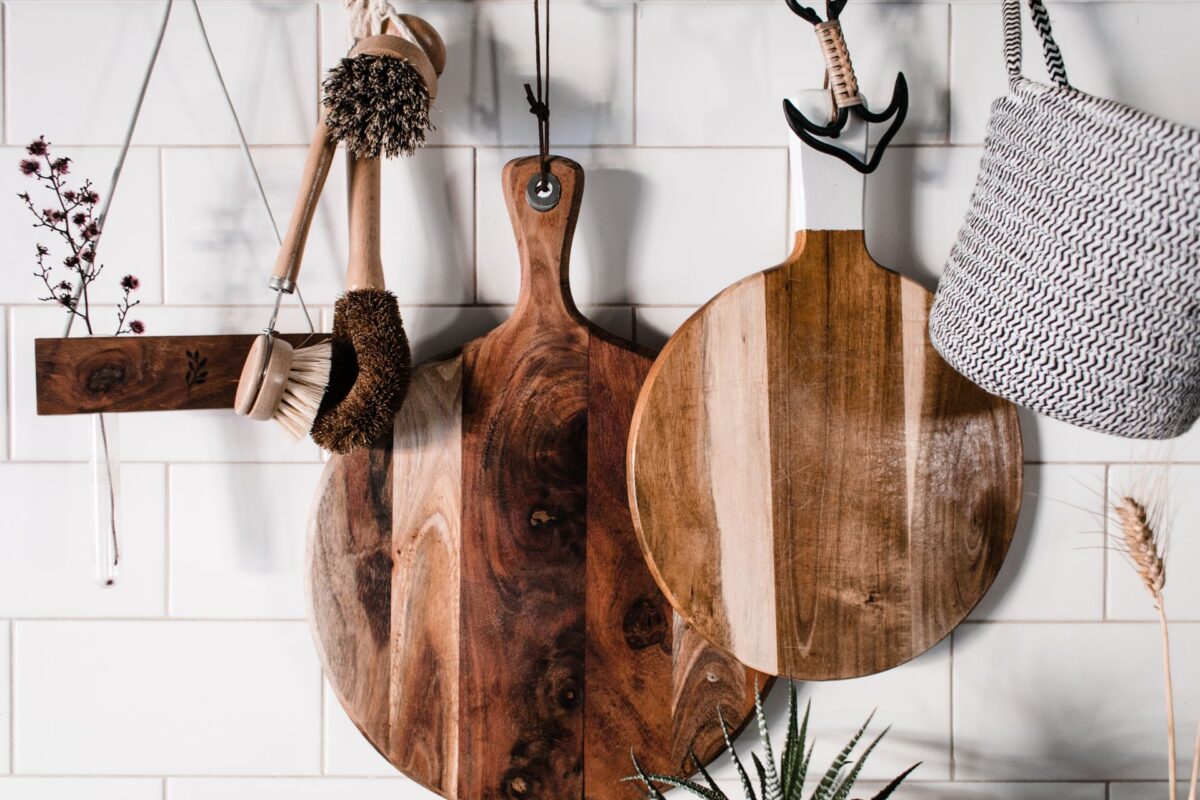
To clean a wooden cutting board, remove any food debris, wash it by hand with dishwashing liquid and hot running water, rinse it well, then towel-dry and leave it to air-dry completely. Do not soak the board or put it away while it is damp. Always check the producer’s instructions because finishes, adhesives and construction methods vary.
What You Need
For normal cleaning, you need:
- Dishwashing liquid
- Hot running water
- A soft sponge or washing-up brush
- A clean towel or paper towel
- A place where air can circulate around the board as it dries
How to Clean a Wooden Cutting Board After Everyday Use
1. Remove leftover food
Scrape or wipe away crumbs and food pieces. Check juice grooves, handles and edges where residue can collect.
2. Wash the entire board by hand
Using dishwashing liquid, hot running water and a sponge or soft brush, clean the cutting surface thoroughly. Wash the reverse side and edges too if they become wet or dirty during use.
Do not leave the board submerged in a sink. Prolonged exposure to water can affect the wood, glued joints or finish.
3. Rinse it well
Rinse away the dishwashing liquid and loosened food. Check grooves and knife marks for visible residue.
4. Towel-dry it promptly
Remove excess water with a clean towel or paper towel.
5. Let it air-dry completely
Stand the board upright, or place it so air can reach both large surfaces. Wait until it is completely dry before putting it in a cupboard or drawer.
How to Clean It After Raw Meat or Chicken
After preparing raw meat, poultry or seafood, use the same five-step method immediately before using the board for another ingredient, especially food that will be eaten without further cooking.
Clean the knife, utensils and worktop that contacted the raw food as well. Using a separate cutting board for raw animal products can also help prevent cross-contamination.
Cleaning and Sanitising Are Different
Cleaning removes food, grease and dirt from the surface. Sanitising is a separate step intended to reduce microorganisms, and it comes after cleaning rather than replacing it.
If sanitising is required, use a product labelled as suitable for food-contact surfaces and compatible with your board. Follow its instructions for dilution, contact time and rinsing, together with the board producer’s care guidance. Do not improvise a homemade disinfectant formula.
Removing Stains, Residue and Odours
A visible mark does not necessarily mean that a board is still dirty. Strongly coloured foods can stain wood even after the surface has been washed.
Always begin with the normal washing method. If an odour or surface residue remains and the producer’s instructions allow it, you can try one optional treatment:
• Baking soda: Guidance from Oregon Metro suggests applying a baking-soda paste for 15 minutes to help remove onion or garlic odours. Rinse it away thoroughly.
• Lemon: The same guidance suggests rubbing a cut lemon over a washed cutting board as a deodorising treatment. Rinse the board afterwards.
• Vinegar: Use it only as an optional household cleaning treatment if the producer permits it, then rinse the board thoroughly.
Use one treatment at a time. Lemon, baking soda and household vinegar do not replace dishwashing liquid and water, and none should be presented as a verified sanitiser for the board. Never mix cleaning or sanitising products unless their labels explicitly instruct you to do so.
If a stain will not lift, check the board’s instructions before using abrasives, sanding it or applying stronger products.
Cleaning Before Oiling
Oiling guidance is not universal. Voedingscentrum advises against oiling wooden cutting boards because oil may slow drying, while some manufacturers recommend a specified food-contact-safe oil for particular boards.
Follow the instructions for the board you own. If its producer recommends oiling, wash it first and let it dry completely before applying the specified product. Choosing and applying oil belongs in a separate care guide.
Can a Wooden Cutting Board Go in the Dishwasher?
Hand-wash a wooden cutting board unless its producer explicitly states that the particular board is dishwasher-safe.
When Should You Replace a Wooden Cutting Board?
Knife marks are normal, but replace a board when damage makes it difficult to clean properly. Warning signs include:
• Deep, hard-to-clean grooves
• Cracks or splits that collect food
• Sections that remain difficult to clean
• Heavy wear or structural damage
Trying increasingly aggressive cleaning methods is not a good solution for a surface that can no longer be cleaned effectively.
A Simple Routine Is Usually Enough
For normal care, hand-wash the board, rinse it, dry it promptly and let it air-dry completely. Follow the producer’s instructions before using any additional treatment.
